The human brain, and more specifically the limbic system, is the region primarily involved in the processing and regulation of emotions. Yet our everyday experiences suggest that emotions are not confined to the brain alone. Expressions such as “butterflies in the stomach” or “gut-wrenching fear” reveal just how strongly we experience emotions in our gut. These physical sensations are often associated with intense emotional responses such as fear, excitement, or anticipation.
The familiar sensation of “butterflies,” for example, is linked to the release of adrenaline, which activates the body’s fight-or-flight response. This response temporarily redirects blood flow away from the digestive system, contributing to that strange fluttering sensation in the stomach.
These experiences suggest that while the brain helps us process, interpret, and rationalize emotions, the gut may also be deeply involved in our more instinctive reactions, those feelings that seem to arise from somewhere deep within us. What if our gut were, in some sense, the true “heart” of our deepest emotions, those that feel alive, instinctive, and profoundly rooted within us?
The connection between emotions and gut in Scripture
In Luke 1:41–42, we read:
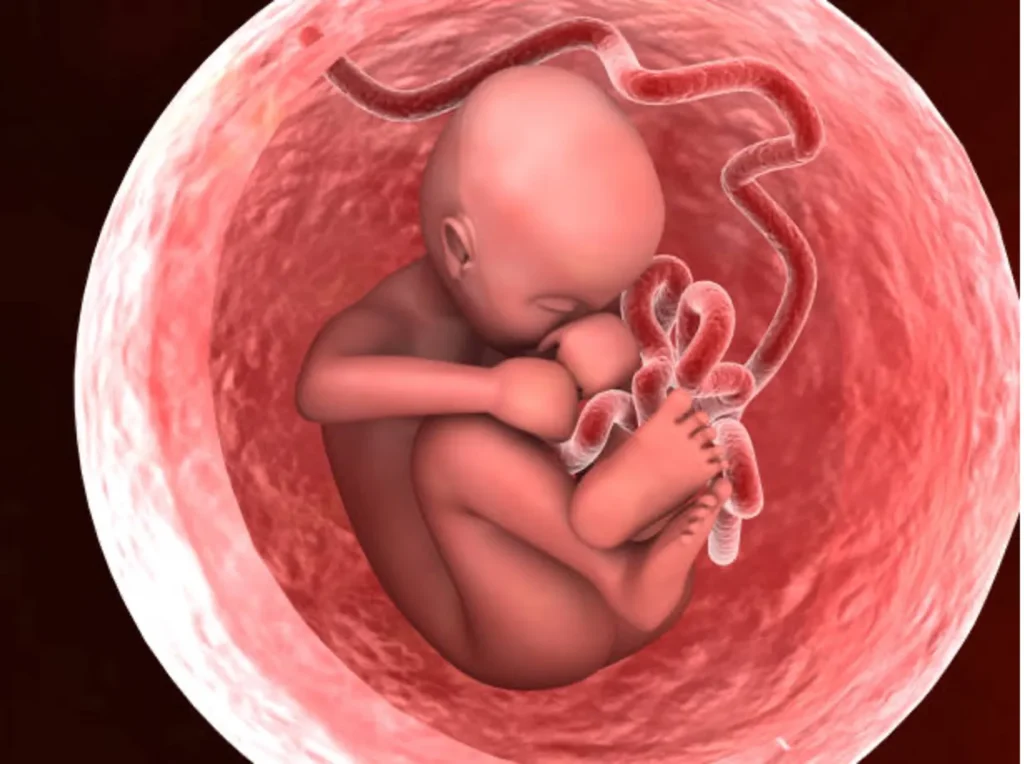
“When Elizabeth heard Mary’s greeting, the baby leaped in her womb, and Elizabeth was filled with the Holy Spirit. In a loud voice she exclaimed: ‘Blessed are you among women, and blessed is the child you will bear!”
The Greek word translated as “leaped” is skirtao, derived from skairo, meaning “to jump” or “to leap.”. In some English translations, the term conveys the idea of a sudden, lively movement similar to the “quickening” of a child in the womb. The same imagery appears in other biblical passages, including Genesis 25:22 and Psalm 114:4–6, where it refers to vivid movements such as jumping, leaping, or springing forth.
Exploring the imagery surrounding this term evokes the idea of something suddenly bursting forth: movement, life, energy, information, even emotion. The English word quicken, meaning “to give life,” carries a similar image of something becoming alive or suddenly activated. Together, these images suggest a dynamic transmission—whether of life, information, or emotional experience.

The gut as a seat of compassion
In Scripture, we also find another powerful expression connected to the gut. For example, in the parable of the Prodigal Son (Luke 15:20), or when Jesus raises the only son of a widow (Luke 7:13), the Greek term “splagchnizomai” is used to describe a compassion so deep that it is felt in the innermost parts of the body.
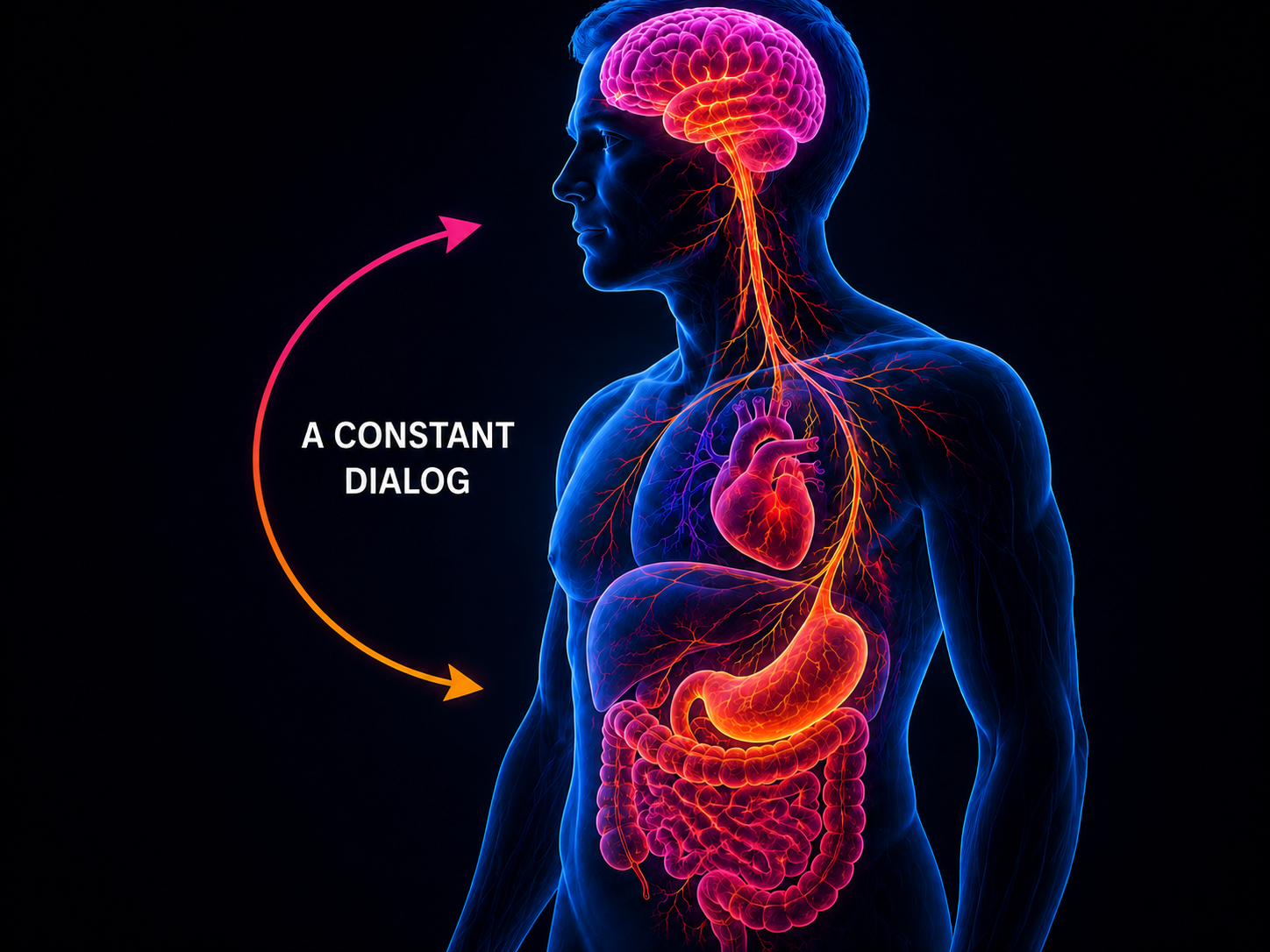
This Greek term is at the root of the French word “splanchnique,” which refers to the viscera, the internal organs such as the heart, lungs, and digestive system. These organs are connected through the vagus nerve, which plays a key role in the parasympathetic nervous system, responsible for “rest and digest” responses, in contrast to the sympathetic nervous system, which activates intense reactions such as fear or stress through the “fight or flight” response.
Emotions felt deep within the gut, such as love and compassion, seem to be associated with what is pure and noble. These profound emotions are experienced in the very depths of our being, and the connection with the vagus nerve highlights just how central our inner organs are to the human emotional experience.
Conclusion
Although the brain processes and interprets emotions, our gut clearly plays an important role in the way we experience them. The digestive system and the brain are in continuous communication, and many of our deepest emotional experiences have an immediate physical expression before we have even consciously analyzed what we are feeling.
We speak of “butterflies in the stomach”, “a knot in the gut”, “a sinking feeling” or simply “knowing something in our gut.” These expressions are more than poetic metaphors. They remind us that our emotional life is deeply embodied. Scripture also presents profound emotions like compassion, love, mercy, empathy, as experiences arising from the deepest parts of our being.
This journey between the brain and the gut shows that, although emotions are shaped by mental processing, they are rooted in much deeper physical centers, touching the most authentic and spiritual dimensions of our humanity.